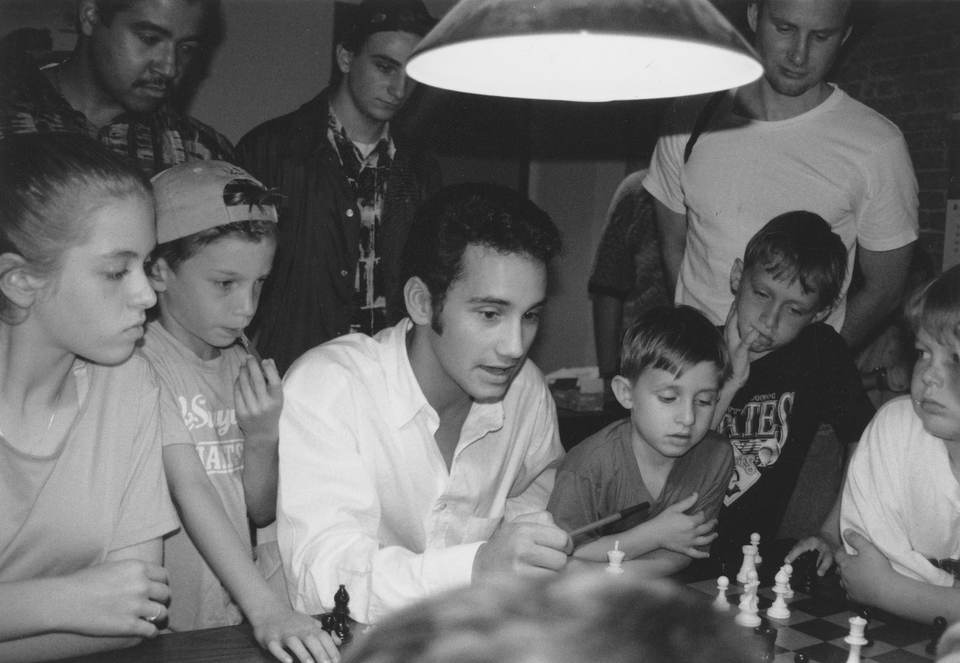
My inspiration comes from a combination of my memories of the pure passion and liberation of first learning to play chess, the years of self-expression under increasing pressure, the joyous competitive fire flowing through my childhood, then a book and a movie complicating things, doing everything they could to externalize what had been so blissfully internal, the self-consciousness that followed, locking me up for years, until I became free again as an artist, but this time a more complex liberation integrating a sense of mortality, existential absurdity, and hard-earned principles into a resilient way of being… and then Charlie, my dear little jungle son, learning to surf and foil and live with an honesty and freedom that has taught me so many lessons all over again.
The mindset with which I have approached my life and arts since I began playing chess as a 6-year-old child has gone through some distinct phases:
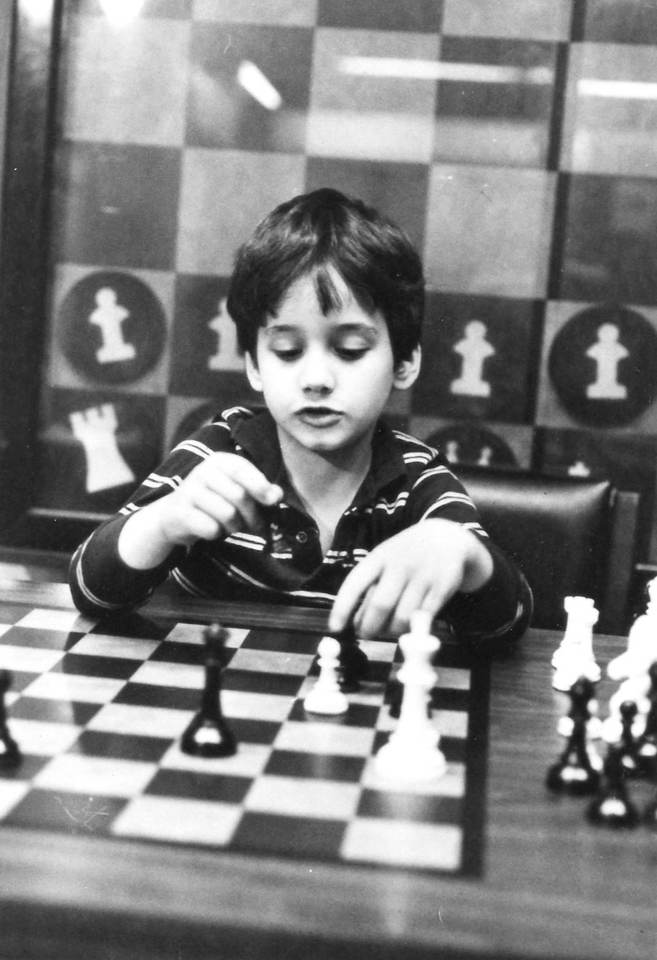
Age 6
Innocent flood gates of learning
I remember those early days in Washington Square Park, watching and then playing my first games of chess. The core feeling I recall was discovering a lost memory. The learning and depth of concentration felt so natural, so unblocked, it was more like remembering something I already knew than working hard to break into novel and complex terrain. My mom says that watching me play these early months, there were times an old man seemed to take me over, my concentration so intense she felt her hand would burn if put between me and the board. I would beat one opponent after the next…and then there were days I had no idea what to do with the pieces.
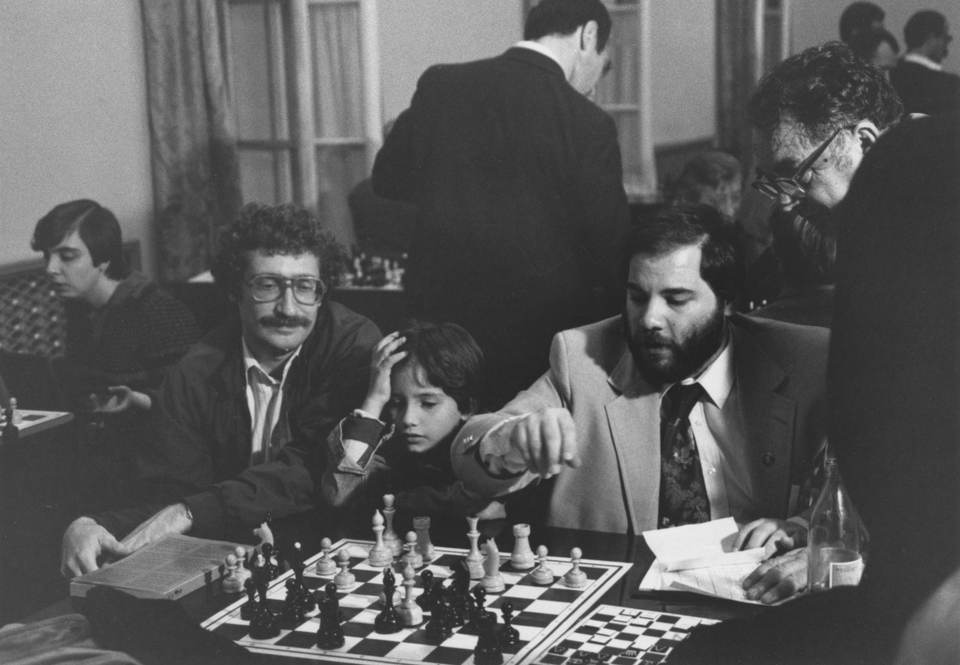
Age 7
Competitive Passion
A playful age, where I moved between sparring with my raucous friends and teachers who were the chess hustlers of Washington Square Park, and studying classical chess with Bruce Pandolfini. In the park I learned to be a tough competitor, to not get rattled under fire, to sniff out tempting traps in the air, to love the battle. The park players rarely stopped talking trash, trying to psych out opponents off the board while launching barrages of dangerous tactics on the board. I was their protégé—they taught me the street game while unleashing it on me. To survive in the park you had to be savvy and resilient, to embrace the fight. On the other side of the polarity, with Bruce I began to learn and respect the subtleties of the art, to take my time, look deeper into positions, peel back the layers…and to love the process. He taught me endgames and principles, and gave me a sound chess foundation that would prove its solidity over a lifetime. These were electric years of growth, play, and passion.
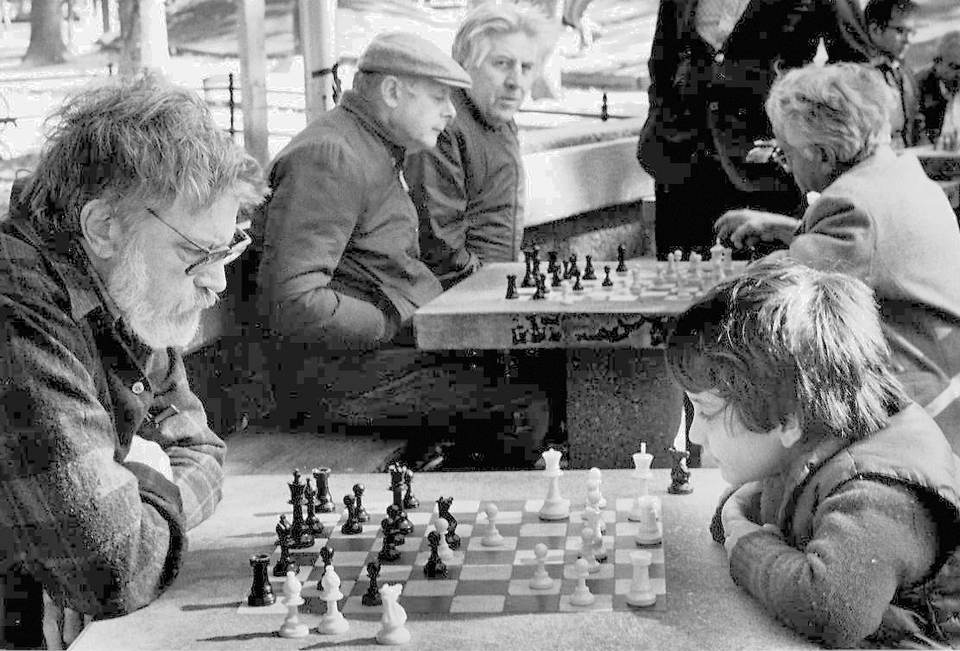
Ages 7-8
Pre-Conscious competitor
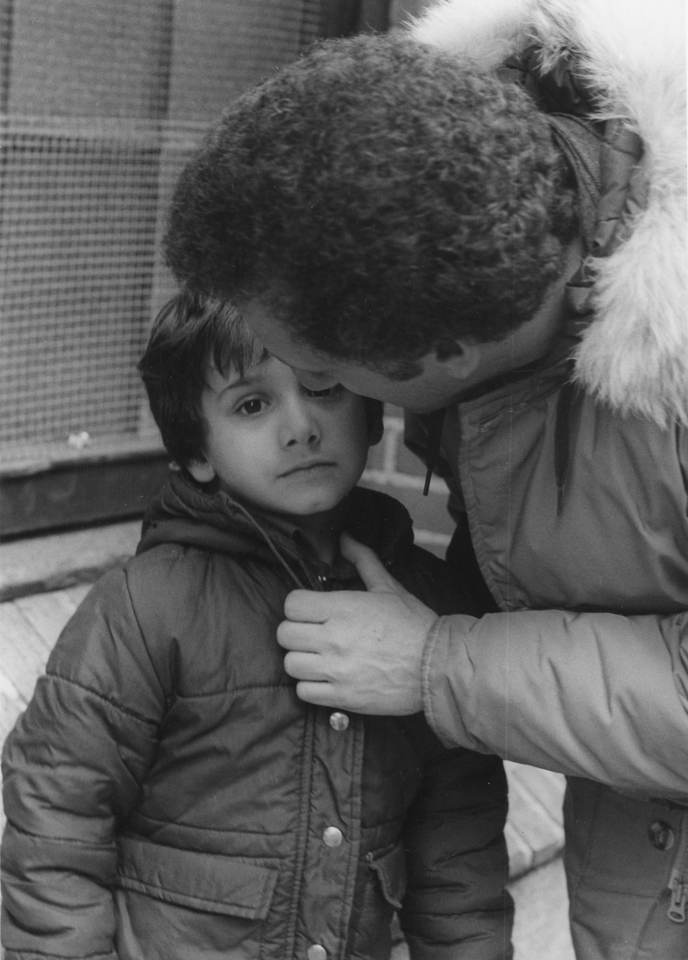
My first year and a half of competition was relatively unobstructed. Kids in scholastic tournaments couldn’t fight like the guys in Washington Square, and I quickly became the top rated player for my age in the US. Part of the reason was that most youth rivals were taught to memorize openings, and to win with traps. But I did not study openings. I studied the endgames with Bruce, and I just battled nonstop in the park. My young opponents were trying to win games out of the gates with memorized opening traps. But I loved to compete in complicated positions. So as games went on, I got stronger as they got weaker. I traveled to my first National Championship feeling invincible…
Age 8-9
Heartbreak and Resilience
…and got my ass kicked. That first Nationals I rolled through my first 6 opponents, was on the first board in the last round against David Arnett (who two years later would become my best friend, throughout childhood). I fell for an opening trap that I could not come back from this time and I was crushed. Heartbreak. Innocence lost. The illusion of invincibility shattered. The greatest thing that ever happened in my chess career. That year from age 8 to 9 was when I learned to be a competitor with an understanding of my own vulnerability integrated into the process. It was not just fun anymore. Now I had my demons to contend with. I had huge internal and external pressure on me. I had a brilliant edgy rival to overcome. I could quit or come to a deeper love for chess. This was the journey that the film Searching for Bobby Fischer captured with a reasonable degree of thematic accuracy.
Age 9-15
Freedom, Love and Self Expression
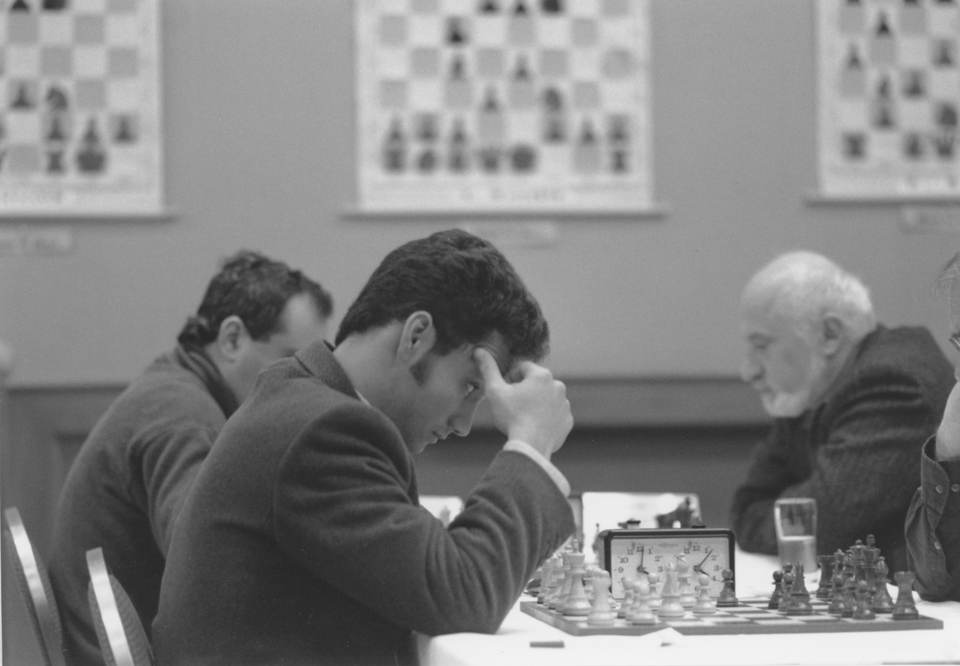
After winning my first National Championship title, I had a period of years through my early teens where I was a free flowing competitor, consistently the top rated player in the country for my age and winning National titles most years. It was as if I had been liberated from something that had once haunted me, and I just loved the game….I was not living without pressure—the book Searching for Bobby Fischer came out when I was 11 years old and there was a lot of national media attention, so I had to learn to compete in the spotlight. And being the top seed/one to beat can feel like everyone is gnawing at your heels, rivals and their coaches targeting every micro and macro weakness with a brutal relentlessness that forces nonstop growth. There were ups and downs to be sure--but there was a feeling of joyous self-expression to that period. I had a confidence and toughness that emerged from playing my game and cultivating it as passionately as possible.
Age 15-18
Self-Consciousness
Then when I was fifteen I fell in love with a girl, began to read existentialist literature, and the movie came out. I now had a deluge of public scrutiny, groupies, stalkers, mainstream press following me to school and writing gossip pieces about my dating life. It was as if the world was doing everything it could to complicate my intrinsic relationship to chess. I also began working with a Russian chess coach who urged me to stop playing in my style, and to study the opposite side of the game. No more attacking chess. No more self-expression. Now I should play in the style of old masters like Anatoly Karpov and Tigran Petrosian whose personalities were the inverse of mine. I wrote about this period extensively in The Art of Learning. It was a time of externalization, self-consciousness, internal friction, observing myself from the outside in, instead of losing myself in the beauty of the game. This was way more complexity than I was mature enough to handle without becoming all twisted up. I was still playing good enough chess, won several High School and US Junior National Championships, and came within a hair of winning the Under 18 World Championship in Szeged Hungary, but I was a mess. I got a stomach ulcer from all the stress. My mother noticed me pulling out my hair during chess games.
Age 18-21
Searching for Myself
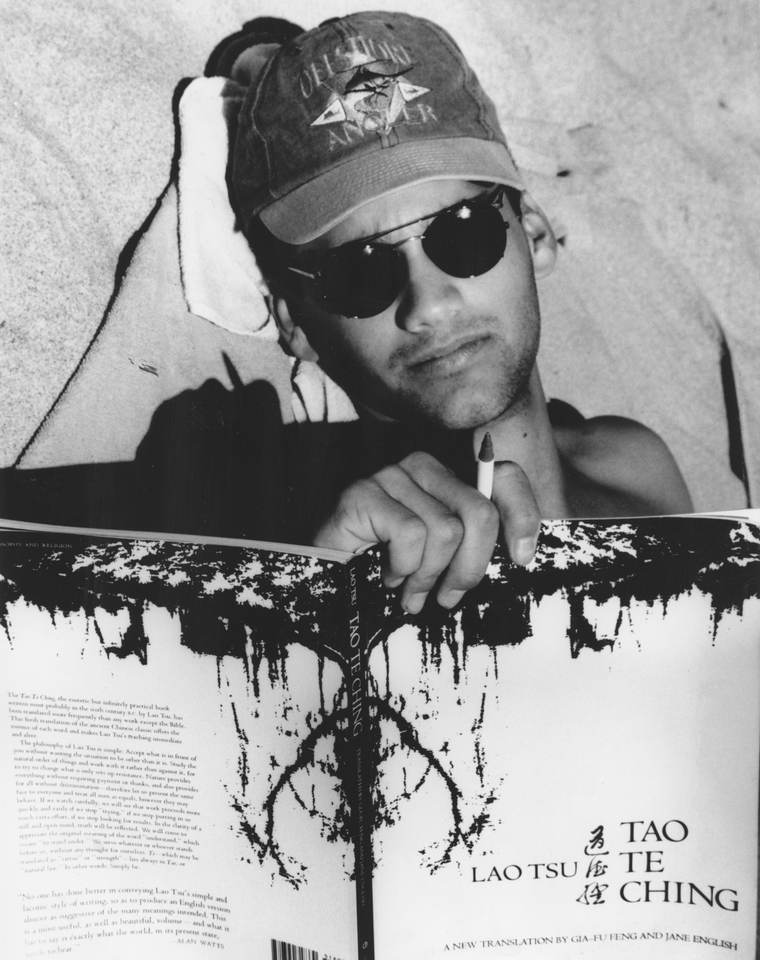
When I graduated high school I left the United States and moved to a tiny village in the mountains of Slovenia with my girlfriend and her family. I needed to escape the pressures of the media spotlight and figure out who I was. This was a passionate, lonely, introspective, formative period of my life. In many ways it planted the seeds for who I would become many years later. During these years I traveled to chess tournaments in European cities, sometimes alone and sometimes with my girlfriend, and then returned to our village life and studied the games. I began to discover how connected chess was to the rest of life—how psychological patterns that manifested on the board could be unearthed and worked on off the board. I was somewhat blocked and erratic as a competitor, but I was full steam ahead in my personal growth—and at times I would play the most uninhibited and beautiful chess of my life.
Age 21-23
Self and Other
I returned to America, went to Columbia University, and began my formal studies of East Asian Philosophy. These were years that gave me a philosophical understanding of what I had been grappling with most of my teens: how the internal and external dance together in the creative process, the relationship between self and other, micro and macro…these were also the final years of my chess life. I felt like I had lost the love, but wanted to make sure it was not just a plateau or trough of love. I remember one summer afternoon reaching clarity on that question, and the resulting sense of wild liberation. I never played another tournament chess game in my life. In fact, it would be over a decade before I would even informally pick up a chess piece. It was time to move on.
Age 23-28
Post-Conscious Competitor
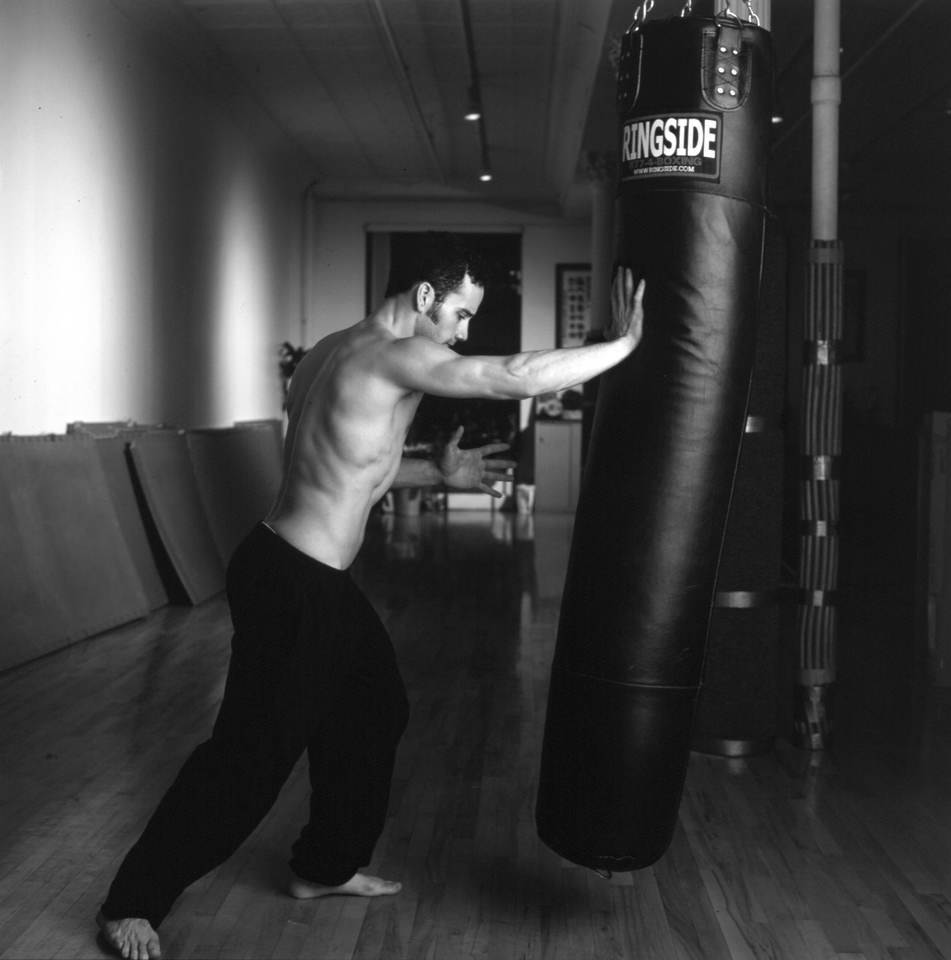
I was initially drawn to Tai Chi Chuan as a meditative practice, to deepen my exploration of the ideas I was studying at Columbia…it felt like I was cultivating an internal flower garden, which was important and healing, but soon I hungered to challenge the state of inner peace I was experiencing. I did not want my internal resonance to be reliant on tranquil external conditions. So I began to study the fighting applications of the art. This soon bloomed into a full intensity competitive Chinese Martial Arts life, which was chronicled in The Art of Learning and climaxed with the 2004 World Championships.
These were years in which the internal and external danced together without interference. I had reached the apex of another competitive discipline, and was living with those same pressures again, but now I had matured as a performer and was not pulled out of flow. There were many parallels to the freedom and self-expression of my early teenage years in chess, but this was a more mature, less naïve manifestation. I understood I was mortal, but I also understood I could take a good punch. I did not feel the need to block things out, avoid distractions, or dampen emotions. I sought out the dirtiest opponents and most challenging conditions I could find, and trained to channel everything into growth and performance. This period of post-conscious artistic liberation became a foundation for much of what I developed in the decades that followed.
Age 29-35
Beginner’s Mind
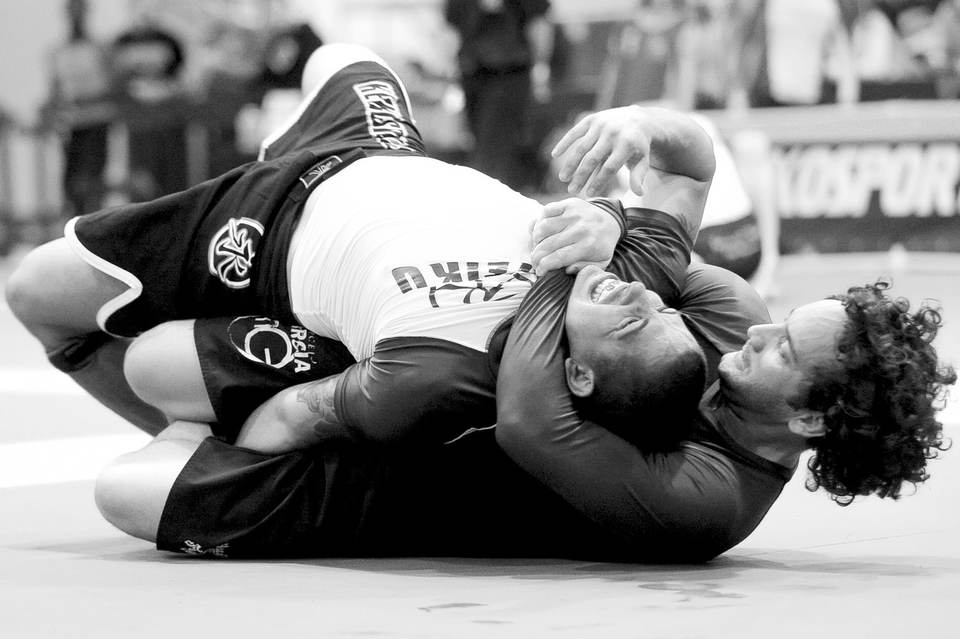
After the 2004 Worlds, I felt the need to be a beginner again, so I started over. Why? The reasons I was aware of at the time: 1) I was ethically uneasy with the amorality with which I exploded through my opponent’s elbow in the Finals in Taiwan (which I narrated in the final chapter of The Art of Learning), and thought it was high time for me to get beat up for a while. 2) I loved the climb more than the summit, and felt better about its egoic dynamics. 3) I needed to learn to fight on the ground to be an all-around martial artist. Brazilian Jiu Jitsu is the most technically complex and well-proven fight art—Royce Gracie had woken up the MMA world to its overwhelming effectiveness, and I had felt its undeniable efficiency in some training sessions in which I felt like I was drowning in turbulent unrecognizable waters and my joints seemed to be exploding out of nowhere. BJJ is like the Endgame in chess…. fights tend to end on the ground, especially if you don’t want them to. I went from being dominant in one martial art, to getting my ass kicked by everyone in another. It was beautiful. And then the climb began.
I’ll describe the arc of my BJJ journey in Part 3 through the lens of Training, but from a Mindset perspective these were years of pushing myself to the limits, working through the ranks of a fiercely truth-telling fight art, and searching for the greatest teachers and training partners I could find. I ultimately became the first black belt of Marcelo Garcia who is a 9-time BJJ and Submission Grappling world champion, and is thought by many to be the greatest grappler pound for pound in history. Marcelo and I opened a BJJ school together in NYC and became dear friends and training partners. These were intense, beautiful, relentlessly humbling years, that ended suddenly just as I was feeling ready to make a run at BJJ Worlds.
Age 35-37
Rupture and embracing The Art of Coaching
I broke my back one week before becoming a father. Then my wife, Desi, lost over half her blood and almost died during an emergency C-Section. We were thrust into parenthood broken, underwater and clawing for the surface. These were rough years for our family, and for me personally.
While I learned to be a dad, and did my best to help Desi come back to health after her ordeal, I was also swirling in existential crisis. My internal identity had always been as an all-in lunatic in whatever discipline was currently speaking to my soul, and now I had hit an excruciating wall of a ruptured L4/L5 disc. BJJ was the first art that I was forced to let go of against my will. I had just reached the level that feels like the beginning of the real journey, tasting the subtle air of the final ascent in which I am at my best, and now I couldn’t walk. After six months of initial healing, and then a year and a half of training through the pain, sports doctors who studied my MRIs told me that if I stuck with BJJ, I would end up crippled for life. After some soul searching, and imagining my kids not having a dad who could play ball or have adventures with them, I let it go.
In the years that followed, I took on the challenge of learning to train others with the same passion that I had for training myself. The art of coaching became a core focus. I had been coaching elite mental and physical competitors professionally for 5 or 6 years before the injury, but my primary internal identity was as the man in the arena. What would it be like to nurture others as a core art?
What emerged was a thriving consulting business that continues today, in which I have formed deep partnerships with mental and physical competitors with the potential to break through to being the best in the world at what they do…helping them get there and beyond…in my work with investors, scientists, world-changing entrepreneurs, fighters, NBA coaches and players, I strive to help unleash each partner’s self-expression with highly individualized training programs. The art of coaching is one that I have come to love, cultivate and refine with a similar sensitivity and drive to how I took on chess and martial arts back in the day.
But something was missing until I found the next Arena for myself.
Age 38 to present
Sand Painting
In my late 30’s, after a near death experience that put a lot of life in perspective, my family decided to move from NYC down to the jungles of Costa Rica…. I had fallen in love with the ocean arts, first surfing and then foiling, and found a home at the top of the jungle canopy, overlooking endless waves arriving from the northern and southern Pacific. It is here that I both train myself and others around the world, while Desi and I raise our two boys, our cats and dog, and live in our little village with some dear friends and family.
One of the most powerful transformations of my recent years has been a deepening respect for nature. We live in a place where the energies are big, undeniable, beautiful, and where the hubris of overwhelming nature seems absurd. When it rains, it is like the sky has opened and turned into a waterfall. When it is sunny, the earth bakes and everything yearns to rest. When the winds channel through the mountains and blow for days at a time, the jungle sways, the animals batten down the hatches, scorpions and spiders fall from the canopy. The trees are huge, vibrant, and robust, complex root systems adapted to survive 6 months of dry season followed by 6 months of steady rains. The soundscape as I sit at my desk is filled with howling monkeys, singing birds, purring cats, crashing waves which have traveled thousands of miles across the ocean from distant storms, and when they arrive, inspire awe.
In this environment of immense natural energy, and riding waves every day on the most potent and sensitive vessel I can find or create, my relationship to artistic cultivation has become increasingly internal, while the external impact has grown in potency… It is a curious thing, how life circles back upon itself, with deepening thematic resonance. I recognize the precursors to this period of life in some of the earlier stages above, but now there is a more integrated feeling. I have lived these past years quite privately, but it does not feel like I am escaping anything. I train myself with a more intrinsic feeling than ever before in my life, but I am also fiercely alive competitively, deeply present with the teams I train around the world as they battle to win the NBA Finals, revolutionize science, tackle the climate crisis, or put up world-class investment returns.
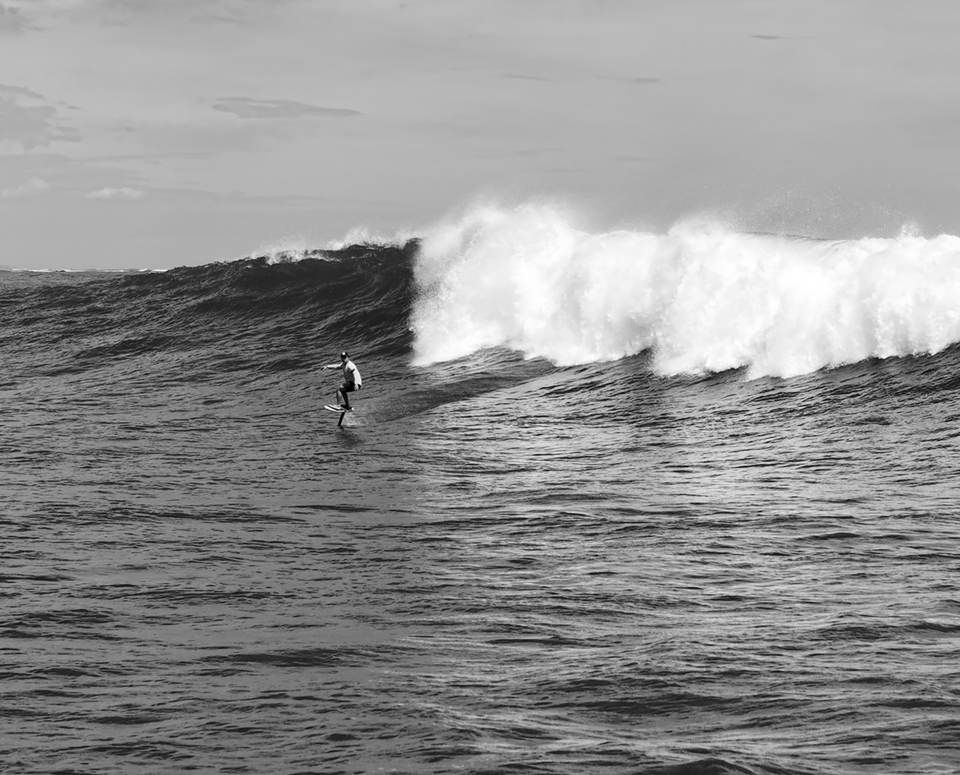
As for my own Arena, I have never loved an art more than I love foiling. I train every day, in the biggest and best waves I can find. Foiling is extremely complex technically and the consequences are high--you are harnessing the principles of aerodynamics to fly on a board two to three feet above the water, connected by a hydrodynamically optimized mast to a carbon wing 28-35 inches below the board that is generating lift from speed and upward water circulation on wave faces. The foil has a front wing and a rear stabilizer, each with countless and radically evolving shapes, connected by fuse options of different lengths, all with tradeoffs and stylistic differences. At high speeds, a quarter degree change of angle of attack on either wing or tail changes everything about a setup, as does any scratch, the grit of the sandpaper you use, let alone a variation in the shape of the wing. Falling at 30-40 mph on top of a sharp 3 foot mast and foil on a 25 foot wave face can be catastrophic if not practiced, so breakfall training is a big part of the technical game.
But once that complexity is internalized into intuitive flow, what I used to call numbers to leave numbers, or form to leave form, the equipment disappears and I connect to ocean energy with a directness that feels like the purest practice of receptivity that I have ever experienced. Foiling is where all my previous arts merge thematically… I feel the Chess, Tai Chi, and BJJ principles I have spent a lifetime cultivating moving through me on the waves. I push my edge, playing with millimeters of margins on my turns while flying at sublime speeds, my whole being filled with stoke, the razor lines of the foil swallowed without a trace into the vastness.